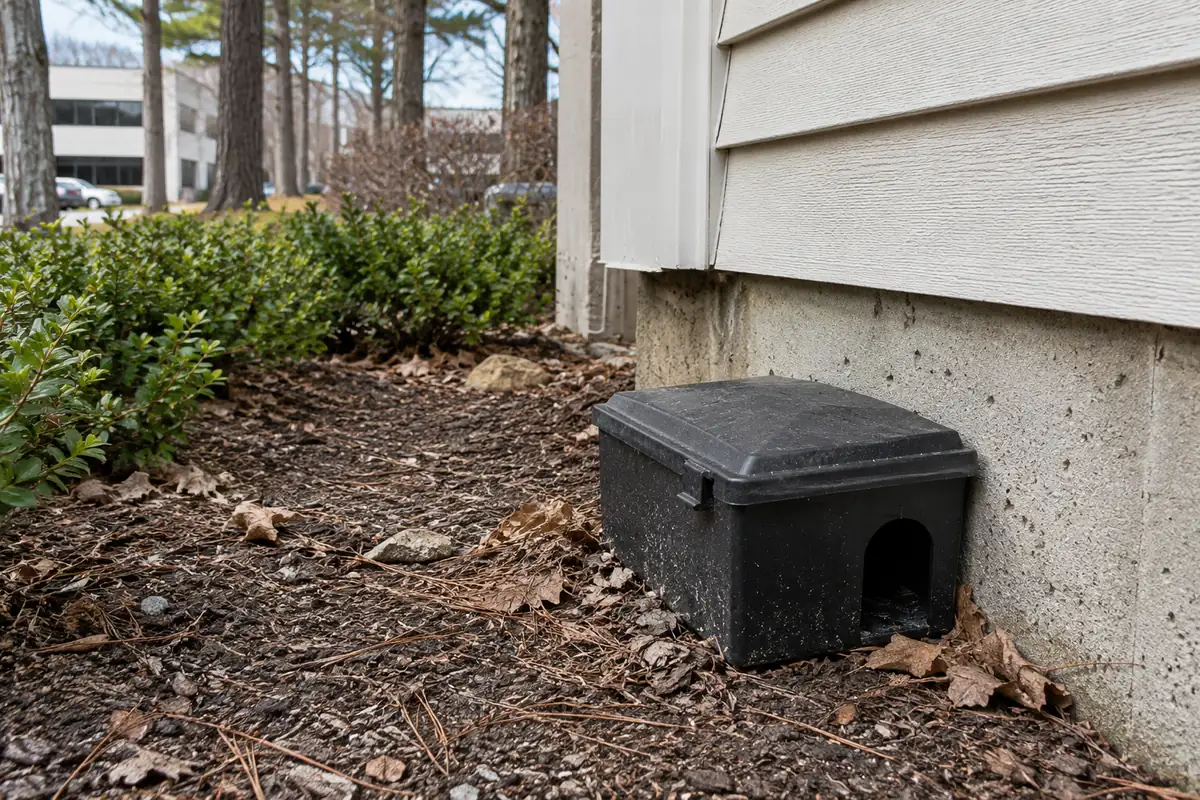
Rodent control in Folsom, CA breaks down into locating the entry points, removing the rodents already inside by trapping or other approved methods, and sealing the house against their return. The species shapes the plan, since roof rats, Norway rats, house mice and, in some areas, pack rats each move and nest differently. Use Call Now to say what noises, droppings or damage you found, and you will reach an independent provider serving 2 ZIP codes around Folsom.
Rodents in Folsom: species and what each one does
| Rodent | Where it nests | How it gets in | Typical sign |
|---|---|---|---|
| Deer mouse and pack rat | Garages, sheds, stored boxes, vehicle engine bays | Gaps at garage doors and wall edges | Nests of sticks, cholla or trash, chewed wiring |
| Roof rat | Attics, rooflines, palms, dense shrubs | Climbs trees, fences and wires, then enters vents, soffits and roof tiles | Noises overhead at night, spindle-shaped droppings, rub marks along beams |
| Norway rat | Burrows by foundations, basements, crawl spaces | Digs along slabs and enters through low gaps, drains and pipe chases | Burrows, greasy runways and blunt droppings at ground level |
| House mouse | Walls, insulation, pantries and appliances | Squeezes through gaps near a quarter inch | Small droppings, shredded nesting, scratching in walls |
Signs of rodents in a house
- Droppings along walls, in cabinets and in the attic
- Gnaw marks on wood, wires, pipes and food packaging
- Nests of shredded paper, insulation or plant material
- Greasy rub marks along baseboards and rafters
- Pet reactions to sounds, and an ammonia-like or musty odor
How rodents get in
A gap of roughly half an inch lets a rat through, and about a quarter inch is enough for a mouse. The usual ways in include roof returns, unscreened attic and gable vents, openings around pipes and wires, worn garage door seals, dryer vents, damaged soffits, foundation cracks and gaps at the chimney.
A tree branch or power line is often the way a roof rat reaches the roof, so pruning limbs to stand a few feet clear of the roof and walls closes off a popular highway.
What the noises in the attic tell you
After dusk, heavy footsteps overhead usually mean roof rats, since rats weigh more than mice, whose scratching and squeaking is lighter. Hearing noise in the daytime can point to a big population, or it can mean another animal altogether, a squirrel for instance. To name the species, a provider looks at droppings, rub marks and entry points instead of listening alone.
Rodent control methods compared
| Method | How it works | Notes |
|---|---|---|
| Sanitation and cleanup | Removing droppings, nesting and contaminated insulation | Reduces odor and prevents attraction. |
| Exclusion | Gaps sealed with hardware cloth, steel wool, copper mesh, sheet metal and sealant | Stops reentry and is the long-term fix. |
| Snap traps | Mechanical traps placed on travel lines | Immediate results with no poison in the structure. |
| Tamper-resistant bait stations | Locked stations outdoors holding rodenticide | Used outdoors and where regulation allows. |
| Live traps and one-way doors | Capture or exit devices for specific cases | Local rules decide whether a rodent can be released. |
Questions to ask a rodent control provider
- How many visits are planned and what happens if activity continues?
- Do you show me photos of what you found and what you sealed?
- Will you use traps, bait or both, and where will each go?
- Where did they get in, and which entry points will you seal?
- Is cleanup of droppings and insulation part of the scope or separate?
How rodent control works from inspection to follow-up
Rodent work is a sequence, and the order matters. Trapping without sealing only replaces the animals you remove. Sealing without trapping can lock a rodent inside the walls. A sound visit does these in order.
- Inspection of the roofline, attic, soffits, vents, foundation, garage, crawl space and utility entries, looking for gnaw marks, rub marks, droppings, nests and runways.
- Identification of the species, because roof rats, Norway rats and house mice travel, nest and take bait differently.
- Trapping or baiting plan: snap traps placed on the travel lines, with tamper-resistant stations outside where rules allow.
- Exclusion: gaps larger than a quarter inch sealed with hardware cloth, steel wool, copper mesh, sheet metal or sealant, and vents and weep holes screened.
- Cleanup and repair recommendations for droppings, contaminated insulation and chewed wiring.
- Follow-up visits to remove traps, check the seals and confirm activity has stopped.
Safety: droppings, nests, pets and children
Rodent droppings, urine and nesting material can carry germs and should be cleaned with care. The CDC and EPA advise ventilating the area, wearing gloves and a respirator rated for the job, wetting droppings with a disinfectant before wiping, and never sweeping or vacuuming them dry.
Pets and children need to stay out of the areas being worked on. Bait belongs only in tamper-resistant stations out of their reach and out of wildlife's reach, certain rodenticides are restricted in some states, and in those places most of the work is done by exclusion and trapping.
What makes rodent control different in Folsom
Sacramento County city by Folsom Lake and the American River with oak woodland, trails, and foothill terrain. Hot, dry summers (100 degrees and above) push ants and wasps toward irrigated yards.
Ants, yellowjackets and wasps, black widows, mosquitoes, roof rats and mice, drywood and subterranean termites, and ticks near trails are common concerns. Neighborhood names to confirm: Historic Folsom (Sutter Street), Broadstone, Empire Ranch, Lake Natoma area, Parkway. Ask the provider how these local conditions change where rodents nest, travel and enter at your address.
Rodent control across Folsom and nearby cities
2 ZIP codes in Folsom, California fall within the area of Pest Control Folsom: 95630, 95763. Requests may also go to providers who serve Orangevale, El Dorado Hills, Fair Oaks, Granite Bay and Citrus Heights. Coverage depends on the address, so state your ZIP code on the call.
Start with Call Now at the top of the page and say what you found, whether noises, droppings or damage. That puts you through to an independent provider, who verifies your address, goes over the roofline and attic and provides the scope in writing.
Related help in Folsom
If this is not quite your situation, these pages cover the neighboring questions: How Pests Get Into Folsom Homes: Entry Points and Fixes; Commercial Pest Control; Cockroach Control; How to Choose a Pest Control Company. The service area list shows every nearby city and ZIP code covered.
Rodent Control in Folsom: common questions
How do I know if I have rats or mice?
Mouse droppings look like grains of rice, whereas rat droppings are larger, roughly the size of a raisin or olive pit. Greasy rub marks and bigger chewed holes also point to rats. At the inspection a technician will confirm which one you have.
Do I need cleanup after rodents?
If droppings, urine or nesting material are found, the area should be cleaned and sanitized, and contaminated insulation may need replacing.
How long does it take to get rid of rodents?
A couple of visits can solve a light problem, but a larger infestation calls for trapping, exclusion and follow-up that may run for several weeks.
Can I seal holes myself?
You can seal small visible gaps yourself using steel wool, copper mesh and sealant. The harder part is the roof and attic, where entry points are often difficult to see or reach, and an inspection helps find them.
Will rodents come back after control?
Rodents come back when entry points are left open or food and shelter are still available. Exclusion and sanitation cut that risk.
Is rodent poison safe?
Regulation covers rodenticides, which can harm pets and wildlife and which are not permitted in the same ways in every place. Where they are allowed, providers use tamper-resistant stations, and plenty of jobs depend on trapping and exclusion instead.